Photography: Seeing, Time, and the Formation of Attention
Photography was my first sustained artistic language. Long before I understood myself as a painter, I used the camera as a way to slow the world down, to study how time, presence, and human experience leave traces. I did not approach photography as documentation, but as a form of inquiry, a way of learning how to see. My first influence in photography was from Jerry Uelsmann at the University of Florida. His monumental, surreal images made by hand (no computers at that time) left me in awe. I also loved the photographs of Diane Arbus, whose portraits of ‘otherness’ were very interesting.
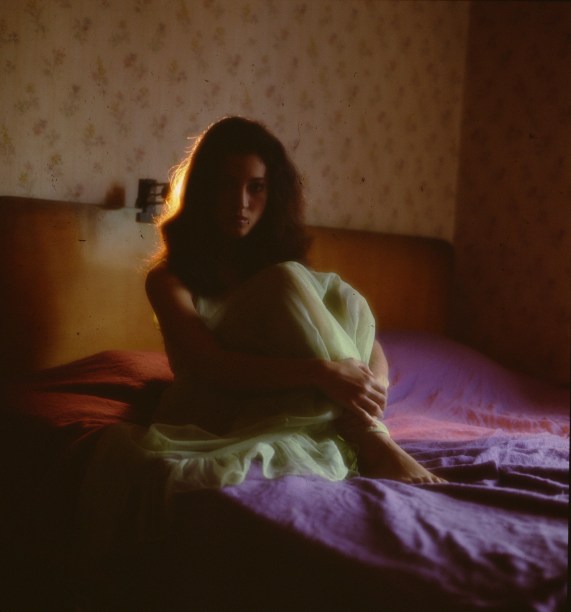
In 1972, I created my first photographic self-portrait series in Berlin Germany. These early works were not performances in costume or persona, but quiet investigations of presence, identity, and perception. They predate the later photographic self-portrait traditions that would become widely known, though my path diverged early. I was interested in role-playing but not spectacle. I was interested in what it felt like to inhabit a body, to be seen, and to witness myself over time.
From the beginning, photography allowed me to observe without intrusion. It gave me distance and intimacy simultaneously. Through the lens, I learned to recognize subtle shifts, posture, expression, atmosphere, light, and to understand how meaning often emerges in what is not immediately declared. This attentiveness would later become foundational to my painting practice.
Throughout my life, photography has remained a parallel practice. I have photographed continuously, across decades and geographies, often without assigning the images a final purpose at the moment of making. These photographs form an archive of looking, a record not of events, but of attention. They track how perception changes as life unfolds.
What links my photography to my later work in painting is not subject matter, but orientation. Photography taught me to notice pattern before meaning, structure before story. It trained me to see how environments shape behavior, how light organizes space, and how the human figure carries emotional information even in stillness. These lessons reappear in my paintings as face patterns, roots, canopies, grids, and neuromorphic pathways.
Photography also taught me restraint. Not everything needs to be declared. Some images require time, patience, and quiet presence. This sensibility remains central to my work. Whether in photographs or paintings, I am interested in what happens when the viewer lingers, when looking becomes an act of participation rather than consumption.
Unlike my painted series, my photographic work does not resolve into a single visual language. It spans decades, places, technologies, and moods. That plurality is intentional. Photography, for me, is not about coherence of style, but coherence of attention. It is a practice of witnessing, of learning how to remain open to what presents itself.
These photographs exist as a living archive. Some are solitary, some observational, some deeply personal. Together, they reveal a continuous thread: a lifelong commitment to seeing slowly, to honoring presence, and to understanding how the world impresses itself upon us when we are willing to look.
Photography did not lead me away from painting. It taught me how to arrive there.